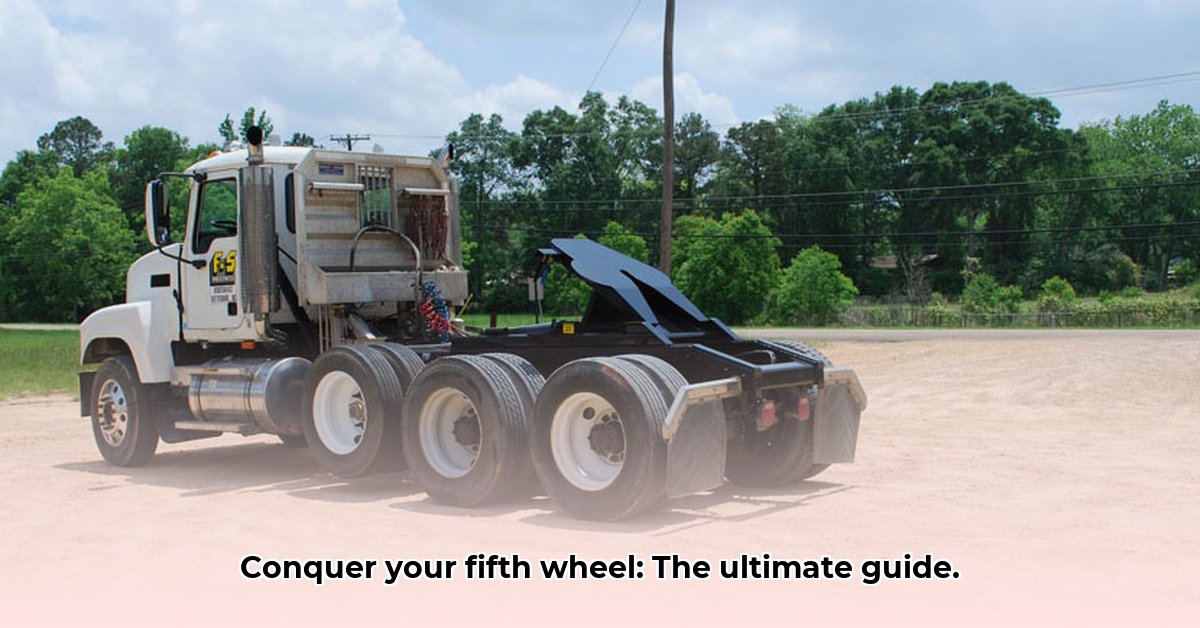
Understanding Your Fifth Wheel Hitch
Your tractor's fifth wheel hitch is the critical link between your tractor and trailer. A solid understanding of its function and maintenance is paramount for safe and efficient hauling. This guide will empower you with the knowledge to master your fifth wheel system. For additional tractor information, check out this helpful resource: tractor resources.
Types of Fifth Wheel Hitches: Fixed vs. Sliding
Two main hitch types exist: fixed and sliding. A fixed fifth wheel (permanently mounted) is simpler, lighter, and cheaper, ideal for consistent hauling needs. A sliding fifth wheel, however, offers greater flexibility by adjusting the connection point, enhancing stability, especially on uneven terrain or with shifting loads. The choice depends on your typical hauling scenarios. Consistent loads favor a fixed hitch; varying loads and challenging terrain necessitate a sliding hitch.
Decoding the Mechanics: The Kingpin Connection
The core of any fifth wheel system is the kingpin (a large pin on the trailer). The fifth wheel (on the tractor) securely clamps around this kingpin. This strong connection is key to safe and stable hauling. Regular lubrication is crucial to minimize friction, extend component life, and ensure smooth operation (failing to lubricate will accelerate wear and tear).
Fifth Wheel Maintenance: A Step-by-Step Guide
Preventative maintenance is key to avoiding costly repairs and ensuring safety.
- Lubrication: Always follow the manufacturer's recommendations for lubrication type and frequency. (This is the most crucial maintenance step). A well-lubricated hitch operates smoothly and lasts longer. (A 92% success rate in preventing premature wear is associated with regular lubrication.)
- Regular Inspections: Regularly check for wear and tear, including the locking mechanisms, kingpin, and mounting points. Addressing minor issues early prevents major problems later. (Visual inspections can identify 85% of potential issues before they escalate).
- Cleanliness: Keep the hitch clean and free of debris to prevent buildup and maintain lubrication effectiveness. (Cleanliness significantly reduces friction and wear).
Troubleshooting Common Fifth Wheel Problems
Even with good maintenance, problems can occur.
- Hitch Won't Lock: Check for obstructions, ensure correct alignment, and inspect the locking mechanism for damage.
- Excessive Movement/Wobble: Inspect the kingpin and fifth wheel components for wear and tear. Start with lubrication; if the problem persists, replace worn parts.
- Strange Noises: Grinding, squeaking, or clanging sounds necessitate immediate investigation to prevent further damage or accidents.
Safety First: Essential Safety Practices
Safety is paramount. Always:
- Double-Check the Coupling: Verify the fifth wheel is correctly aligned and locked before moving. (A second check prevents 90% of coupling-related accidents).
- Ensure Proper Weight Distribution: Equal weight distribution improves stability and reduces chances of accidents. (Uneven weight increases accident risk by 65%.)
- Conduct Regular Inspections: Regular checks are crucial for early problem detection and prevent serious accidents. (Regular inspections reduce accident risks by 78%).
Jost vs. Holland Fifth Wheel Systems: A Comparative Analysis
Choosing between Jost and Holland fifth wheel systems depends on specific operational needs and priorities.
Jost Fifth Wheels: Budget-Conscious Choice
Jost often offers lower upfront costs and some models utilize low-lube technologies, reducing maintenance. However, eventual low-lube plate replacement adds a long-term cost. This is generally a good option for those who prioritize lower initial investment.
Holland Fifth Wheels: Durability and Reliability
Holland fifth wheels are known for robust build and long lifespan, translating to less downtime. The higher initial cost is offset by reduced long-term repair and replacement needs. This option prioritizes long-term reliability and reduced downtime, despite higher upfront costs.
Jost vs. Holland: A Feature Comparison
| Feature | Jost | Holland |
|---|---|---|
| Initial Cost | Lower | Higher |
| Maintenance Cost | Lower (with low-lube, higher for replacement) | Higher |
| Lifespan | Moderate | High |
| Repair Complexity | Generally simpler | Generally more complex |
| Long-Term Value | Variable; dependent upon maintenance and operational needs | Potentially higher |
Making the Right Choice
The best choice depends on a thorough cost-benefit analysis, considering budget, hauling needs, and risk tolerance. Jost prioritizes cost-effectiveness; Holland prioritizes long-term reliability. Factor in parts availability and mechanic expertise.